

Commercial and Workplace EV Charging on the Central Coast: A Practical Guide
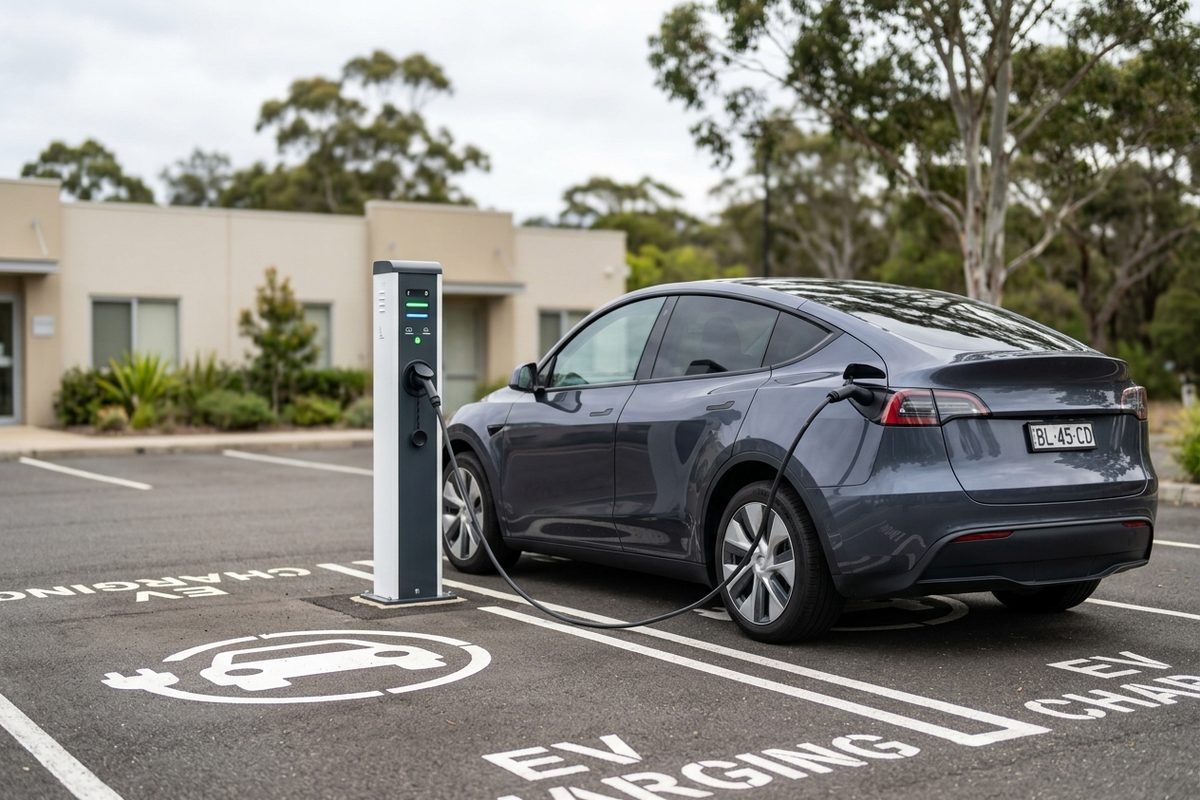
EV charging at a business is a different proposition from a single charger in a home garage. The questions shift from one car overnight to several vehicles through the day, from a single circuit to a site's whole electrical capacity, and from convenience to who pays for the power. For Central Coast businesses weighing up charging, here is what shapes a sensible installation.
Who Installs Commercial Charging, and Why
Workplaces fitting out staff and visitor parking, fleet operators charging vehicles between shifts, retail and hospitality sites offering charging as a drawcard, and strata-managed buildings serving multiple residents all have reasons to install charging. Each has a different usage pattern, and that pattern drives the design more than the choice of hardware does.
Single Bay or Many
A small site might start with one or two bays; a fleet depot or a larger workplace may need a row of them. The leap from one charger to many is not just more hardware, it is a question of whether the site's electrical supply can feed them all at once. Running several chargers at full output simultaneously can demand more power than the site has available, which is where load management becomes essential rather than optional.
Load Management Across a Site
Commercial load management shares the available supply intelligently across all the bays, so the site never exceeds its capacity even when every bay is in use. Instead of each charger demanding full power, the system distributes what is available, often perfectly adequate, since vehicles rarely all need a full charge at the same moment. This can avoid or defer an expensive supply upgrade.
Metering and Billing
The moment charging serves more than one party, the question of who pays arises. Commercial units can meter energy per bay and per user, so staff, residents, or customers are billed for what they use rather than the cost disappearing into the site's common power. For strata in particular, getting metering right is what keeps charging fair and free of disputes.
Planning the Site
A commercial install starts with the supply, what the site has, what the chargers will need, and how the two are reconciled with load management or an upgrade. From there it covers bay layout, cable routing, protection, accessibility, and future expansion. Because commercial sites vary so widely, this work is scoped and quoted individually rather than from a standard package.
Building in Room to Grow
EV uptake is climbing, so a site sized only for today's demand can be short within a few years. Laying cable capacity and switchboard provision for additional bays during the first install is far cheaper than retrofitting, and it is worth planning for at the design stage.
Accessibility, Standards and Signage
A commercial charging area carries obligations a home install does not. Bays should be laid out so they are usable and, where required, accessible, with clear line-marking and signage that identifies EV-only spaces and discourages other vehicles from blocking them. Cable management matters for safety in a shared space, connectors and cables need to sit clear of walkways. An experienced installer designs the bays with these practicalities in mind so the site is not just electrically sound but workable day to day.
Incentives and Planning Support
Programs supporting business and fleet charging come and go, and they can shift the economics of a larger installation. It is worth checking what is currently available before committing, and factoring any support into how the project is staged. Sizing the project to take advantage of support where it exists, while still standing on its own merits if that support changes, is the prudent way to plan, and the figures should always be confirmed against the current source. A short conversation early on about how the business expects to use the bays, staff only, customers, fleet, or a mix, usually does more to shape a cost-effective design than any single piece of hardware.
Frequently Asked Questions
Can a business install several chargers at once?
Yes, though the key question is whether the site's supply can feed them simultaneously. Load management lets multiple bays share the available power so the site stays within its capacity, often avoiding a costly upgrade.
How is charging billed to staff or residents?
Commercial chargers can meter energy per bay and per user, so each person is billed for their own usage rather than the cost falling on the site's common power. This is especially important for strata and workplaces.
Is commercial charging quoted differently from a home install?
Yes. Commercial sites vary widely in supply, layout, and usage, so they are assessed and quoted individually rather than from a fixed price, with the site's electrical capacity as the starting point.
Should a business plan for more bays later?
It is wise to. EV numbers are rising, and laying cable and switchboard capacity for future bays during the first install is far cheaper than retrofitting them later.
Planning EV Charging for Your Business?
Get a free, no-obligation quote from a licensed electrician serving the Central Coast.