

A Day in the Life of Solar EV Charging on the Central Coast
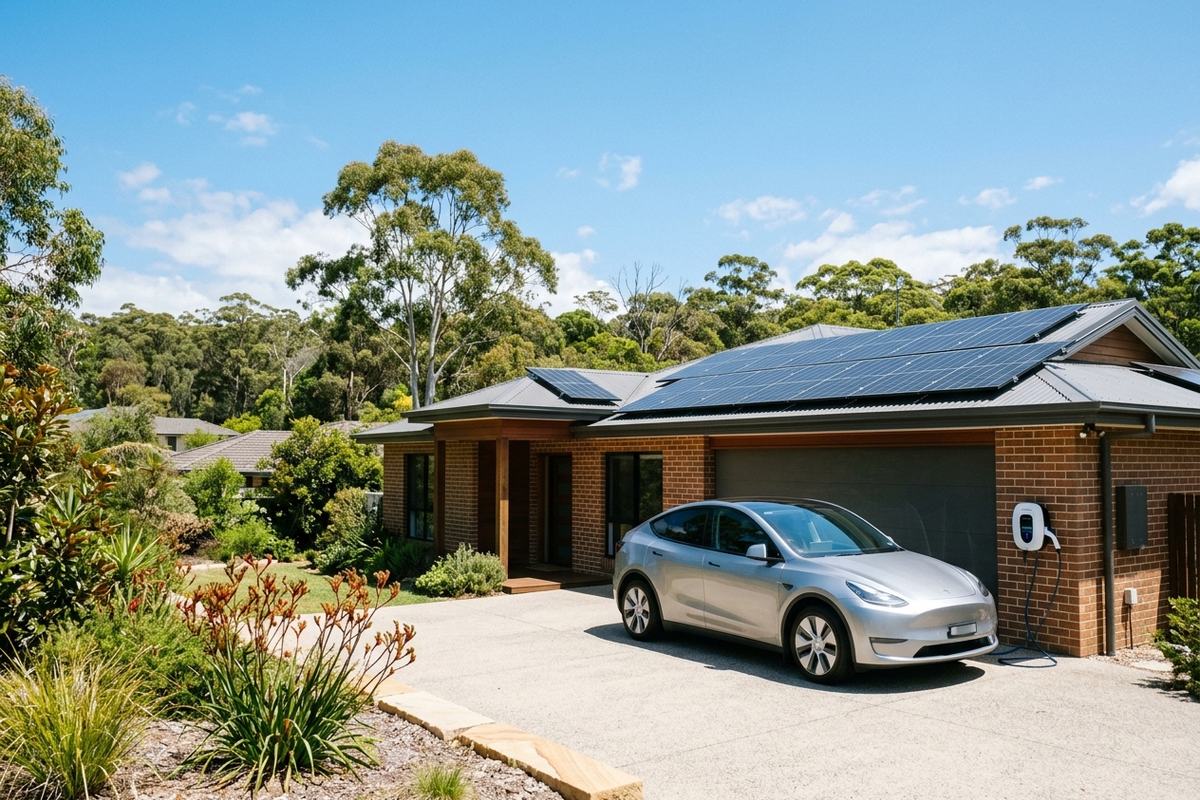
The theory of solar EV charging is easy to state, run the car on surplus sunshine instead of selling it cheaply. What it looks like in practice is more interesting, and it explains why a solar-aware charger is worth the extra over a basic unit. Here is a sunny Central Coast day, hour by hour.
Morning: The Panels Wake Up
By mid-morning the rooftop array is generating well. The household's background load, fridge, standby devices, maybe a load of washing, takes a slice, and the rest would normally flow to the grid for a modest feed-in tariff. A solar-aware charger watches that surplus build and, once there's enough spare, begins feeding it to the car instead.
Midday: Peak Surplus
Around the middle of the day generation peaks. With the house quiet and the sun high, there's a healthy surplus, and the charger ramps up to soak up as much of it as the car will take. A cloud passes and generation dips; the charger eases back so the home never has to buy grid power to feed the car. The sun returns and it ramps up again. This constant balancing is exactly what a basic charger can't do.
Afternoon: Topping Off
As the afternoon wears on and generation tapers, the charger does what it can on the remaining surplus. For a car that's been home since morning, that's often most of a day's driving replaced on sunshine alone, at little to no running cost.
Evening: Where a Battery Earns Its Place
Here's the catch: many people drive their car during the day, so it isn't home to catch the midday peak. That's where a home battery changes everything. The battery stores the day's surplus, and the car charges from it after dark, so even an overnight charge runs largely on stored sunshine rather than the grid. Without a battery, solar charging suits weekends and work-from-home days; with one, it works every night.
The Economics Behind It
The reason this is worth doing comes down to one gap: exported solar earns a small feed-in rate, while grid power costs several times more to buy. Every unit the car takes directly from the roof is worth the higher buy price avoided. Over a year of daily charging, that difference adds up to a genuinely cheaper way to run a car.
Cloudy Days and Winter
The sunny-day picture is the best case. On an overcast Central Coast day, or through the shorter days of winter, the array generates less and the surplus shrinks, so a pure solar charge is slower or partial. This is where the charger's blended mode earns its place, topping up from the grid to keep things moving while still taking whatever solar is available. Over a year, solar charging does the heavy lifting in the sunnier months and contributes what it can in the leaner ones.
Setting Realistic Expectations
Solar charging is a way to cut running costs substantially, not necessarily to charge entirely free every day. How much of the car's energy comes from the roof depends on the array size, the driving distance, and whether the car is home during the day. An installer who looks at the system's real generation data against the household's driving can give an honest sense of how much of the charging solar will actually cover.
For a Central Coast home with panels, the appeal is straightforward: a car that already costs little to run becomes cheaper still, and on a good day runs largely on energy the roof would otherwise have sold off cheaply. Whether that suits comes down to when the car is home and whether a battery is in the picture, exactly the things worth talking through before choosing a charger, so the setup matches how the household actually lives.
Frequently Asked Questions
Can I charge from solar if I drive the car during the day?
Not directly, since the car isn't home to catch the midday surplus. A home battery solves this by storing the surplus during the day so the car can charge from it in the evening. Without a battery, solar charging suits weekends and work-from-home days.
Does solar charging need a special charger?
Yes. A solar-aware charger with a sensor at the switchboard is what tracks generation and consumption and charges from surplus. A basic charger can't follow the sun like this.
What happens when a cloud passes?
The charger eases back so the home isn't pulled onto grid power to feed the car, then ramps up again as generation recovers. This automatic balancing is the whole point of a solar-aware unit.
Is solar charging really cheaper?
Yes, because solar exported to the grid earns far less than grid power costs to buy. Charging the car directly from surplus avoids that gap, which adds up over a year of daily driving.
Run Your Car on Your Own Sunshine?
Get a free, no-obligation quote from a licensed electrician serving the Central Coast.