
What Affects the Cost of an EV Charger Installation on the Central Coast
Ask three installers what a home EV charger costs and the answers can land surprisingly far apart, not because someone is overcharging, but because the job genuinely varies house to house. Understanding what drives the figure makes a quote far easier to read, and shows where the money actually goes.
The Cable Run Is Usually the Biggest Variable
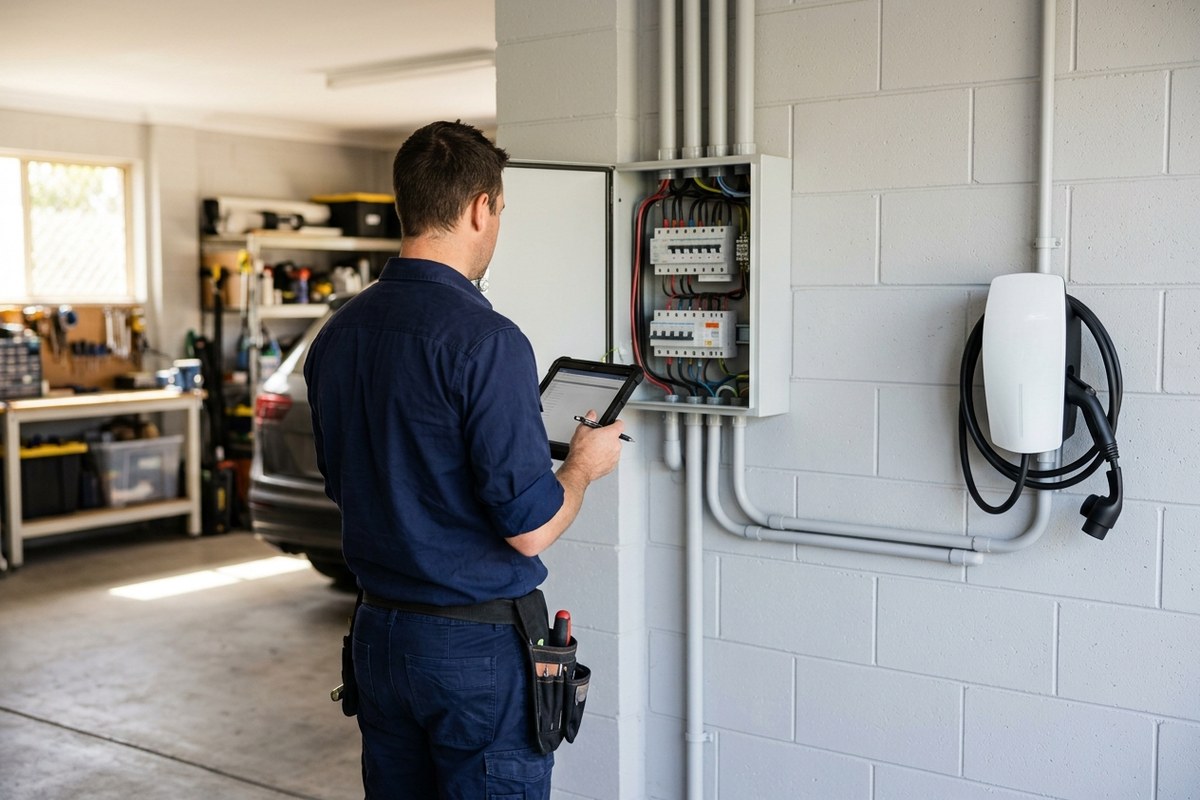
The single thing that moves a quote most is the distance and difficulty of the run from the switchboard to where the charger will sit. A charger mounted on the other side of the wall from the board is a short, simple job. One at the far end of the house, with the cable threaded through a roof space, down a cavity, and along an external wall in conduit, is a great deal more labour and material. Two-storey homes, brick construction, and limited roof access all add to it.
Switchboard Work, If Any
If the board has a spare circuit position and the right protection, the charger circuit drops straight in. If it is an older board with ceramic fuses, no room, or missing residual current devices, it needs work first, and that can range from adding a breaker and a safety switch through to a full upgrade. This is the factor most likely to surprise a homeowner, which is exactly why a good installer checks the board before quoting rather than after.
The Charger Itself
Chargers span a wide range. A basic single-phase unit sits at the affordable end; smart units with apps, scheduling, load management and solar integration cost more. Three-phase units cost more again. The right choice is about features that will actually be used, not the dearest box on the shelf, a point worth raising with whoever quotes.
Single-Phase or Three-Phase Supply
A standard single-phase install is the common, more affordable path. A three-phase charger and circuit cost more, and if three-phase has to be brought into the property first, that is a major job on its own. For most homes single-phase is both cheaper and entirely sufficient.
Why a Site Visit Beats a Phone Quote
Because the cable run and switchboard are the big variables, a number given sight-unseen is a guess. A short look at the board and the parking spot, often possible from a few clear photos, lets an installer quote with confidence and avoids the mid-job surprise that turns a tidy price into an open-ended one.
How to Read and Compare Quotes
When two quotes differ, the gap is almost always in two line items: the cable run and any switchboard work. A higher quote often reflects a longer or harder run, or board work the cheaper quote quietly left out, only for it to reappear as a variation mid-job. The way to compare fairly is to make sure each quote covers the same scope: the dedicated circuit and its protection, the full cable route, any board upgrade needed, the charger model, and the compliance certificate. A quote that itemises these is easier to trust than a single lump figure.
It is also worth asking what is not included. Patching or making good after a cable run, a meter or supply change if three-phase is involved, or a board upgrade flagged as "if required" can all turn a tidy headline price into something larger. A clear quote names these up front so the final figure matches the one agreed.
One last thing worth keeping in perspective: the install is a one-off, while the running savings of charging at home, especially off-peak or from solar, accrue every week for years. A slightly dearer quote that includes proper switchboard work and a clean cable run is usually the cheaper option over the life of the charger, because it avoids rework and runs trouble-free. The aim is the right job at a fair price, not the lowest number on paper.
Frequently Asked Questions
Why do EV charger quotes vary so much?
Mostly because of the cable run and whether the switchboard needs work. A short run to a modern board is simple; a long run plus a board upgrade is a much bigger job. The charger model and single- versus three-phase supply also move the figure.
What part of the job is most likely to add unexpected cost?
Switchboard work. Older or full boards may need a breaker, a safety switch, or a full upgrade before a charger can be added safely. A good installer checks this up front so it is in the quote, not a surprise later.
Can I get an accurate price over the phone?
Rarely without some detail. Clear photos of the switchboard and the parking area let an installer give a close estimate; trickier jobs warrant a quick site visit. A number with no look at the site is only ever a rough guess.
Does a cheaper charger save money overall?
Sometimes, but not always. A basic unit costs less up front, yet a smart charger with load management can occasionally avoid a switchboard upgrade, saving more than it costs. The right call depends on the home.
Want a Straight Price on a Home Charger?
Get a free, no-obligation quote from a licensed electrician serving the Central Coast.