
EV Charging in Apartments and Strata: What's Involved
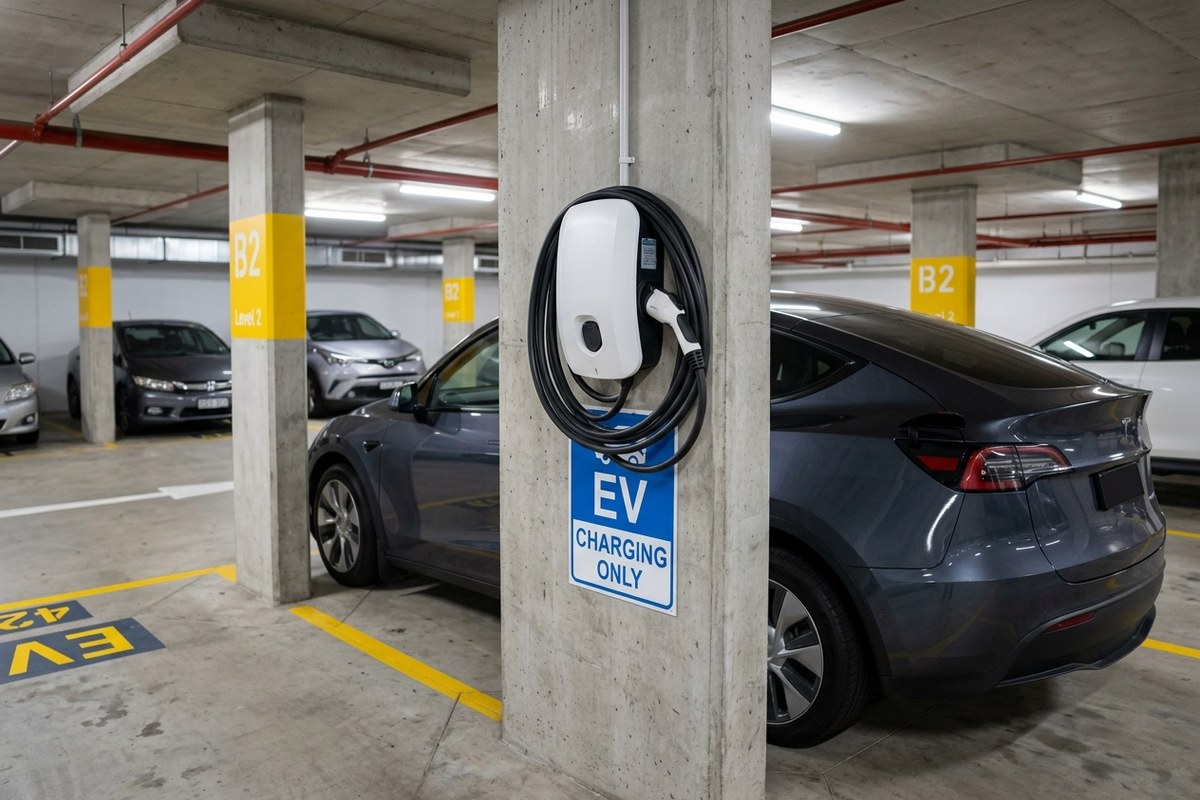
Charging an EV in a freestanding house is straightforward. Doing it in an apartment or strata complex adds a layer, because the car space sits within shared property and shared power. It's very doable, plenty of Central Coast strata residents now charge at home, but it pays to know the steps before buying the car.
The Space Is Yours, the Building Isn't
In most strata setups your car space is yours to use, but the walls, the cabling routes, and the electrical supply are common property managed by the owners' corporation. Installing a charger means running a new circuit through that common property, which is why it isn't simply a matter of booking an electrician, the building has a say.
Owners' Corporation Approval
The usual first step is seeking approval from the owners' corporation (the body corporate). Many have become familiar with EV requests and some have a standing policy or an EV plan; others consider them case by case. A clear proposal, where the charger goes, how the cable is run, how the power is metered and billed, makes approval far smoother. In NSW, strata rules have been evolving to make reasonable EV requests easier, but approval is still the gateway.
Metering Is the Crux
The single most important technical point is metering. Your charging must be billed to you, not drawn from the building's common power where everyone shares the cost. A charger fed from your own apartment's supply, or fitted with its own metering that reports your usage, keeps it fair. Getting this right up front is what prevents disputes later, so it's central to any strata proposal.
Cabling and Future Residents
How the cable runs from the supply to your space matters, and so does whether the building plans for more EVs later. Some owners' corporations prefer a shared infrastructure approach, a backbone that future residents can tap, rather than a series of one-off runs. An electrician experienced in strata can design the install to suit the building and, where relevant, leave room for others to follow.
The Realistic Path
For a resident, the sensible order is: talk to the owners' corporation early, get an electrician to assess the supply and the cable route, put up a clear proposal covering metering and billing, then install once approved. It's a few more steps than a house, but a well-prepared request usually gets there.
Shared Infrastructure vs One-Off Installs
Strata buildings broadly go one of two ways. A one-off install wires a single resident's space from an appropriate supply, quickest for the first mover. A shared-infrastructure approach installs a common backbone that multiple residents can connect to over time, with each charger metered individually. Buildings expecting several EVs increasingly prefer the backbone, because a string of uncoordinated one-off runs gets messy and can exhaust the supply. Which suits depends on the building's appetite and how many residents are likely to follow.
If Approval Takes Time
Owners' corporation processes can move slowly, so it pays to start early, ideally before the car arrives. A well-prepared proposal helps: a clear plan from an electrician showing the cable route, the metering arrangement, and that common power won't foot the bill answers most of the questions a committee will raise. Coming with that detail, rather than a vague request, is usually the difference between a quick yes and months of back-and-forth.
The encouraging trend is that strata EV charging is becoming routine rather than exceptional, and many Central Coast buildings have already worked through their first installs. Approaching it the right way, early conversation, a clear electrician-backed proposal, and metering sorted up front, turns what sounds daunting into a manageable process, and gets a resident charging at home like any house owner does.
It also helps to know that the rules around strata EV charging in NSW have been moving in residents' favour, with growing recognition that reasonable charging requests should be accommodated rather than blocked. That does not remove the need for approval and proper metering, but it does mean a well-prepared, fair proposal is more likely to land well than it would have a few years ago, another reason to come to the owners' corporation with a clear, electrician-backed plan.
Frequently Asked Questions
Can I install an EV charger in my strata car space?
Usually yes, but it involves the owners' corporation because the cabling and supply are common property. A clear proposal covering location, cabling and metering makes approval much smoother.
Do I need owners' corporation approval?
In most cases, yes, running a new circuit through common property needs the body corporate's sign-off. Many are now familiar with EV requests, and NSW strata rules have been evolving to make reasonable requests easier.
How is my charging billed in a strata building?
Your charging should be metered to you rather than drawn from common power. That's done by feeding the charger from your own supply or fitting metering that reports your usage, getting this right prevents disputes.
Can the building prepare for more EVs later?
Yes. Some owners' corporations install shared infrastructure that future residents can tap into rather than allowing one-off runs. An electrician experienced in strata can design for that.
Charging in an Apartment or Strata?
Get a free, no-obligation quote from a licensed electrician serving the Central Coast.