

Future-Proofing a New Build or Renovation for EV Charging
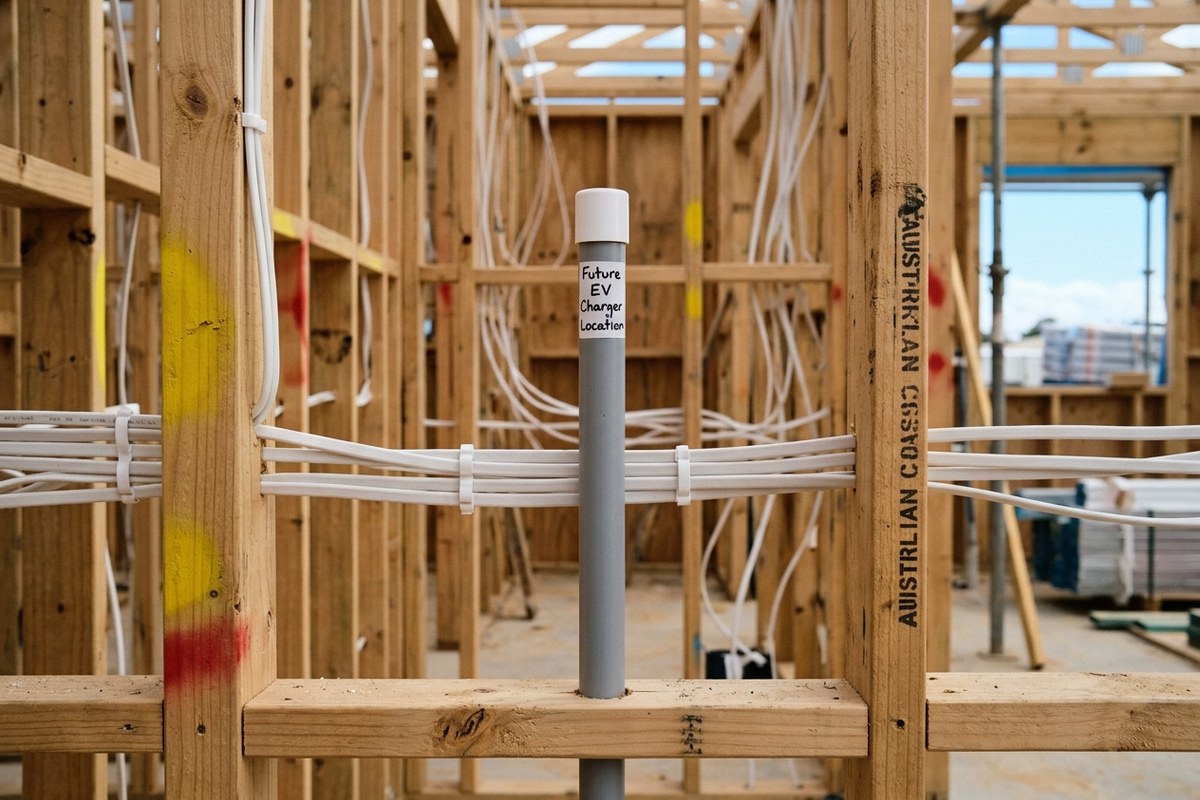
The cheapest time to prepare a home for an EV charger is when the walls are already open. During a new build or a renovation, running the groundwork for charging costs very little; doing the same work later, once everything's closed up and finished, costs many times more. Even for a household that doesn't own an EV yet, a little foresight at rough-in stage is smart insurance.
Why Open Walls Change the Maths
Most of the cost of an EV charger install isn't the unit, it's the labour of getting a dedicated circuit from the switchboard to where the car parks, threaded through roof spaces, walls and conduit. During construction or a renovation, those cavities are open and the electrician is already on site running cable. Adding a charger circuit, or at least the conduit for one, is a marginal cost then. Retrofitting it into a finished home is a standalone job with all the difficulty back in.
What to Run In
The sensible minimum is a conduit (a cable pathway) from the switchboard to the likely charger location, garage, carport or driveway wall, so a circuit can be pulled through later without opening anything up. Going a step further, running the actual cable and leaving the board provision means the charger is a quick connection when the time comes. Which level makes sense depends on how likely an EV is and the budget at build time, but even the bare conduit is worth it.
Size the Switchboard for What's Coming
A new build or a board upgrade is also the moment to leave spare capacity and spare circuit positions, not just for a charger, but for solar and a battery too. A board sized only for today's appliances forces an upgrade the moment anything significant is added. A little headroom built in now avoids that entirely.
Think About Where the Car Will Live
Future-proofing is partly a conversation about how the household will use the home. Where will the car park? Could there be two EVs one day? Is solar likely? Raising these at the design stage lets the electrician place the conduit, size the circuit, and leave board capacity to match, so the home is genuinely ready, not just cabled to a guess.
Cheap Insurance
EV uptake keeps climbing, and a charger is fast becoming a feature buyers look for. Pre-wiring during a build or renovation is low-cost while the walls are open, adds to the home's readiness, and saves a much larger bill later. It's one of those decisions that looks obvious in hindsight, best made before the plasterer arrives.
Raise It With the Builder and Electrician Early
Pre-wiring only happens if it's on the plan, so the time to ask is at the electrical planning stage, not after the walls are sheeted. Tell the builder and the electrician an EV is likely, where the car will park, and whether solar or a battery might follow. It's a short conversation that lets them place a conduit, allow a circuit, and size the board accordingly, for very little added cost while everything is open. Left unsaid, none of it happens, and the opportunity closes when the plasterer arrives.
Resale and Buyer Expectations
There's a resale angle too. As EVs become mainstream, an EV-ready home, or one with a charger already fitted, is increasingly a feature buyers look for, much as solar became. A home that's been pre-wired can advertise that readiness, and a buyer who owns or plans an EV sees one less job to do. Building it in during construction is cheap; it quietly adds to the home's appeal down the track.
The thread through all of this is timing. Almost everything that's cheap to do during a build or renovation becomes expensive once the walls are closed and the job's finished. A short conversation at the planning stage about EVs, solar and where the car will live costs nothing and locks in options for years. It's the rare bit of future-proofing that pays off whether you buy the EV next month or in five years.
Frequently Asked Questions
Should I pre-wire for an EV charger even without an EV?
It's worth it if there's any chance of an EV down the track. While the walls are open during a build or renovation, running a conduit or circuit costs little; retrofitting it into a finished home costs far more.
What's the minimum worth doing during construction?
At least a conduit from the switchboard to the likely charger spot, so a circuit can be pulled through later without opening walls. Running the cable and leaving board provision goes further if an EV is likely.
Should the switchboard be sized for more than today?
Yes. Leaving spare capacity and circuit positions readies the board for a charger, solar and a battery, and avoids forcing an upgrade the moment something significant is added.
When's the right time to plan this?
At the design stage, before the walls are closed. Discussing where the car will park, whether two EVs are possible, and whether solar is likely lets the electrician place conduit and size the board to match.
Building or Renovating on the Coast?
Get a free, no-obligation quote from a licensed electrician serving the Central Coast.