
7kW and Level 2 EV Charger Installation: Choosing the Right Charging Speed
Why does one home charger fill a car in a few hours when a wall socket takes most of a day? The answer is power output, and it is the single most useful thing to understand before choosing a charger. For the majority of Central Coast homes, a 7kW Level 2 unit is the sweet spot, but it helps to know why.
What Level 2 Actually Means
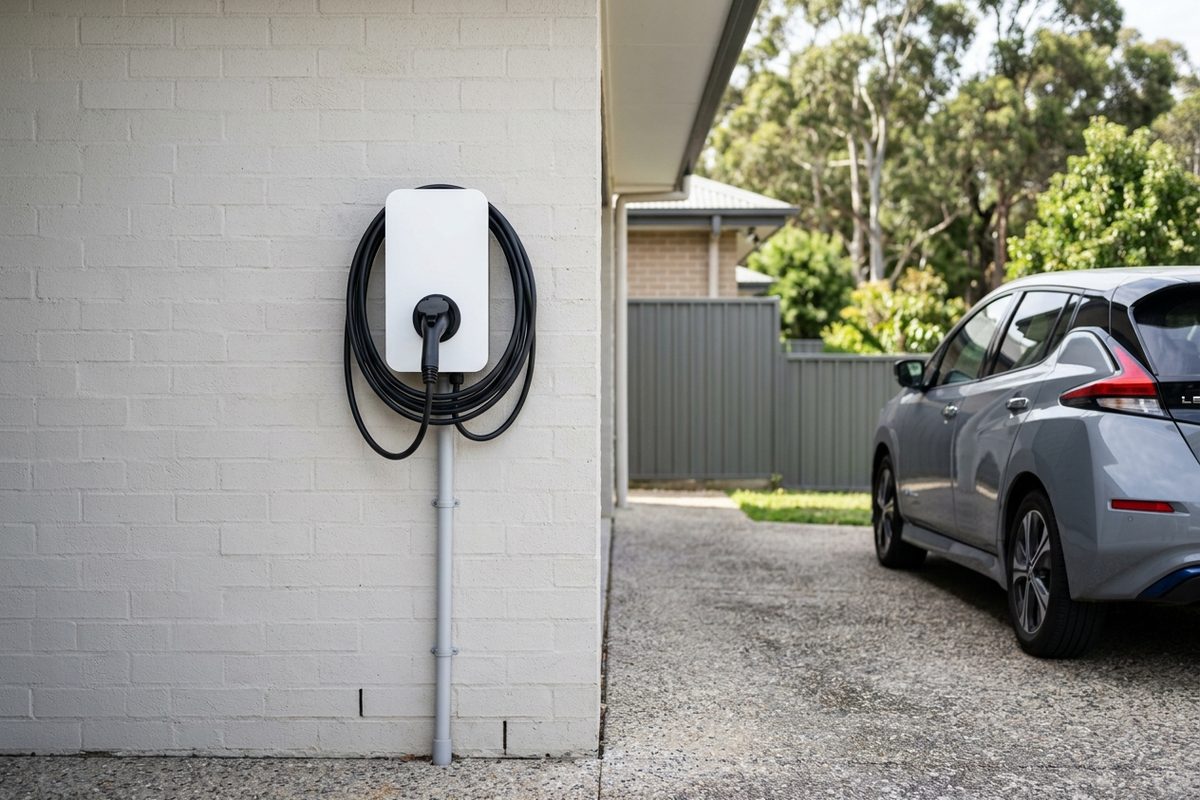
Charging is loosely grouped into levels. Level 1 is a standard wall socket using the portable cable supplied with the car, convenient as a backup, but slow, because an ordinary outlet delivers only a trickle relative to a battery's size. Level 2 is a dedicated wall-mounted charger on its own circuit, and it is where home charging gets genuinely practical. A 7kW Level 2 unit delivers several times the power of a wall socket.
What 7kW Looks Like in Daily Use
Output is measured in kilowatts, and 7kW is the standard maximum for a single-phase home supply, which most houses have. In practical terms, a 7kW charger adds a healthy chunk of range every hour it runs, comfortably more than enough to replace a normal day's driving while a car sits parked of an evening. For the average household, the car is plugged in far longer than it needs to reach full, so the charger spends most of the night idle rather than straining.
Why Bigger Is Not Always Better
It is tempting to chase the highest number on the box, but charging speed is capped by three things at once: the charger's output, the home's supply, and what the car's onboard charger will accept. Many vehicles accept around 7kW on a single phase anyway, so a larger unit on a single-phase home delivers no extra speed, the car simply will not take it faster. Paying for output the home or the car cannot use is money that buys nothing.
When to Look Beyond 7kW
There are real cases for more. A home with a three-phase supply can run an 11kW or 22kW charger, and a vehicle that accepts three-phase charging will use it. Households covering very high daily distances, or running more than one EV, may genuinely benefit from the extra speed. The deciding factors are the supply at the switchboard and the car's specification, not a desire for the biggest figure.
Matching the Charger to the Home
Choosing well comes down to a short, honest assessment: what the supply can deliver, what the car can accept, and how the household actually drives. From there the right output is usually obvious. A 7kW unit suits the bulk of single-phase homes; a three-phase unit makes sense where the supply and the vehicle can both take advantage of it.
What Really Decides How Long a Charge Takes
Beyond the charger's output, two things shape how long a top-up takes: how much range the battery has lost since it was last charged, and how large the battery is. A car driven 40 kilometres a day recovers that in a fraction of an overnight charge whatever the charger's rating, while a near-empty large battery takes longer even on a quick unit. Because most homes plug in every night, the car rarely runs low, so the practical charging time is short regardless of the headline figure on the box.
Charging on Off-Peak Power
A Level 2 charger pairs neatly with a time-of-use electricity plan. Set to run in the off-peak window overnight, it draws its power when grid rates are at their lowest, which is where the running-cost advantage of an EV is fully realised. A unit with scheduling built in makes this automatic, so the car charges at the cheapest hours without anyone having to think about it.
Frequently Asked Questions
Is a 7kW charger fast enough for everyday driving?
For most households, comfortably. A 7kW unit replaces far more range overnight than a typical day's driving uses, and the car is usually parked much longer than it needs. Only very high-mileage drivers or multi-EV homes tend to need more.
Will a bigger charger charge my car faster?
Only if both the home's supply and the car can use the extra output. On a single-phase home, 7kW is the ceiling, and many cars accept around that on single phase regardless, so a larger unit often adds no real-world speed.
What is the difference between Level 1 and Level 2 charging?
Level 1 is the portable cable into a normal power point, slow, and best kept as a backup. Level 2 is a dedicated wall charger on its own circuit delivering several times the power, which is what makes home charging practical day to day.
How do I know if my home can run more than 7kW?
It depends on whether the property has a three-phase supply, which an electrician can confirm at the switchboard. Single-phase homes are limited to around 7kW; three-phase opens up faster options if the vehicle supports them.
Not Sure Which Charging Speed You Need?
Get a free, no-obligation quote from a licensed electrician serving the Central Coast.