
Solar-Integrated EV Charging on the Central Coast: Running the Car on Sunshine
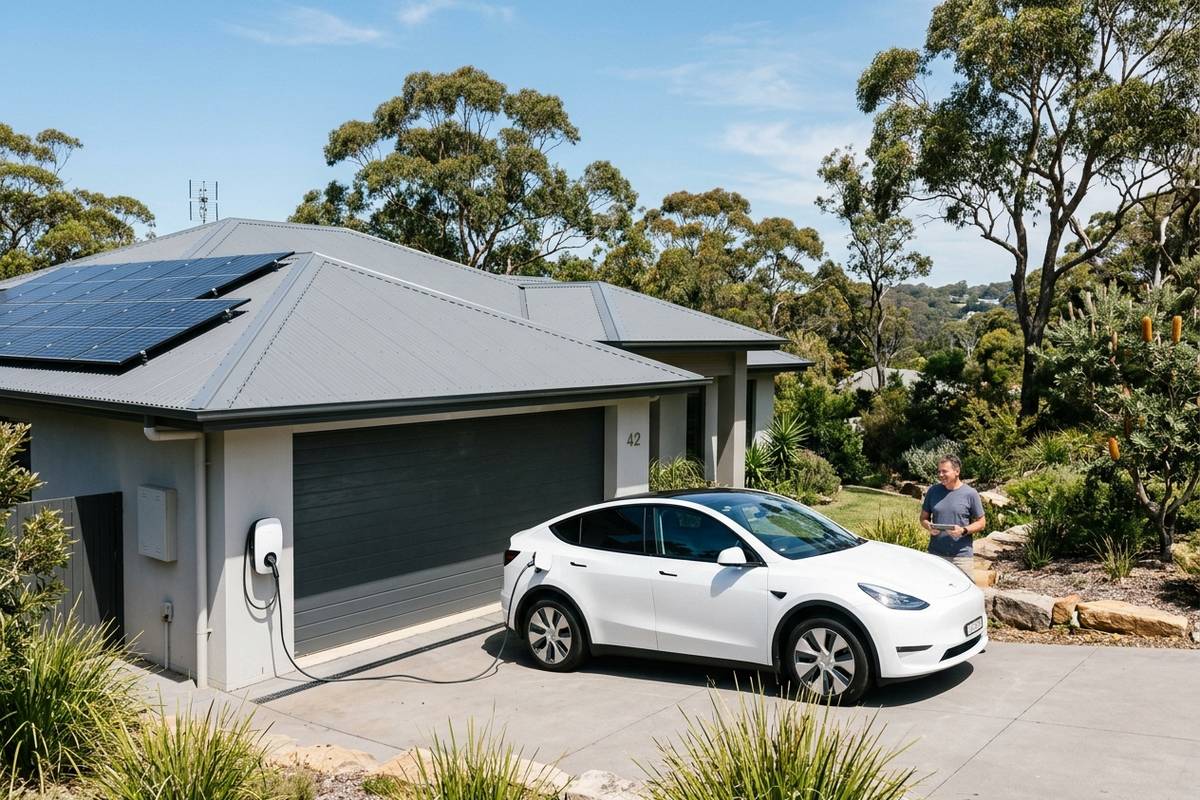
Picture a sunny Central Coast weekday: the panels on the roof are generating well, most of the household is out, and the surplus is flowing back to the grid for a modest feed-in tariff. Now picture that same surplus going into the car instead. That is the appeal of solar-integrated charging, and for homes with panels it is one of the cheapest ways to run an EV.
Why Daytime Solar and EVs Suit Each Other
Rooftop solar produces most of its energy in the middle of the day, exactly when many cars sit idle at home or could be. Exported solar usually earns far less than grid power costs to buy, so every kilowatt-hour diverted into the car instead of the grid is worth considerably more to the household. An EV is, in effect, a large battery on wheels that can soak up surplus generation that would otherwise be sold cheaply.
How Solar-Aware Charging Works
A solar-aware charger watches what the home's panels are producing and what the household is consuming, then charges the car from whatever is left over. As a cloud passes or a big appliance switches on, the charger eases back so the home is never pulled onto expensive grid power to feed the car; as the sun returns, it ramps up again.
The Usual Modes
Most solar-capable units offer a few modes: a pure mode that charges only from genuine surplus, a blended mode that tops up from the grid to keep a minimum charge rate, and a fast mode that ignores solar and charges at full output when the car is needed soon. Being able to switch modes is what makes the feature practical rather than rigid.
What the Setup Needs
Solar-integrated charging needs a compatible smart charger and a way for it to measure generation and consumption, usually a sensor fitted at the switchboard. The existing solar system does not normally need replacing; the charger is added alongside it and configured to read the home's energy flows. An electrician confirms the inverter and metering arrangement and sets the charger up to match.
Where a Home Battery Fits
A home battery and solar charging are complementary, not competing. With a battery in the mix, surplus solar can be stored during the day and used to charge the car after dark, so even an overnight charge can run largely on stored sunshine rather than the grid. For households that cannot park the car at home during the day, that combination unlocks the solar benefit they would otherwise miss.
Does the Solar System Need to Be Bigger?
Adding a car to a home's electricity use is, in effect, adding a sizeable new appliance, so it is fair to ask whether the existing array is large enough. The answer depends on how far the car travels and how much surplus the panels already produce. A modest daily commute can often be covered by the surplus a typical rooftop system already exports; a long-distance driver may find the panels are fully committed and a larger array, or simply some grid charging, fills the gap. A solar installer or electrician can weigh the system's generation data against the car's needs and give a realistic picture.
Where Feed-In Tariffs Come Into It
The financial case for solar charging rests on the gap between what exported solar earns and what grid power costs. As feed-in tariffs have fallen, that gap has widened, which makes self-consuming solar through the car more worthwhile than it was a few years ago. Every unit of generation the car uses directly is worth the retail price of power avoided rather than the smaller export rate, which is why diverting surplus into the vehicle adds up over a year.
Frequently Asked Questions
Can I charge my car from solar if the car is out during the day?
Not directly while it is away, but a home battery can store the surplus during the day and charge the car in the evening. Without a battery, solar charging works best when the car can be home during generating hours, such as on weekends or for those who work from home.
Do I need a special charger to use solar?
Yes. A solar-aware charger and a sensor at the switchboard are what let the unit track generation and consumption and charge from surplus. A basic charger cannot do this.
Will solar charging slow the car's charging down?
In pure solar mode it charges only from surplus, so the rate varies with the weather and can be slower. Most units also offer a blended or fast mode that tops up from the grid when you need the car ready sooner.
Do I have to replace my existing solar system?
Usually not. The charger is added alongside the existing system and configured to read its output. An electrician will confirm your inverter and metering work with the charger you choose.
Want to Charge Your EV From Your Solar?
Get a free, no-obligation quote from a licensed electrician serving the Central Coast.