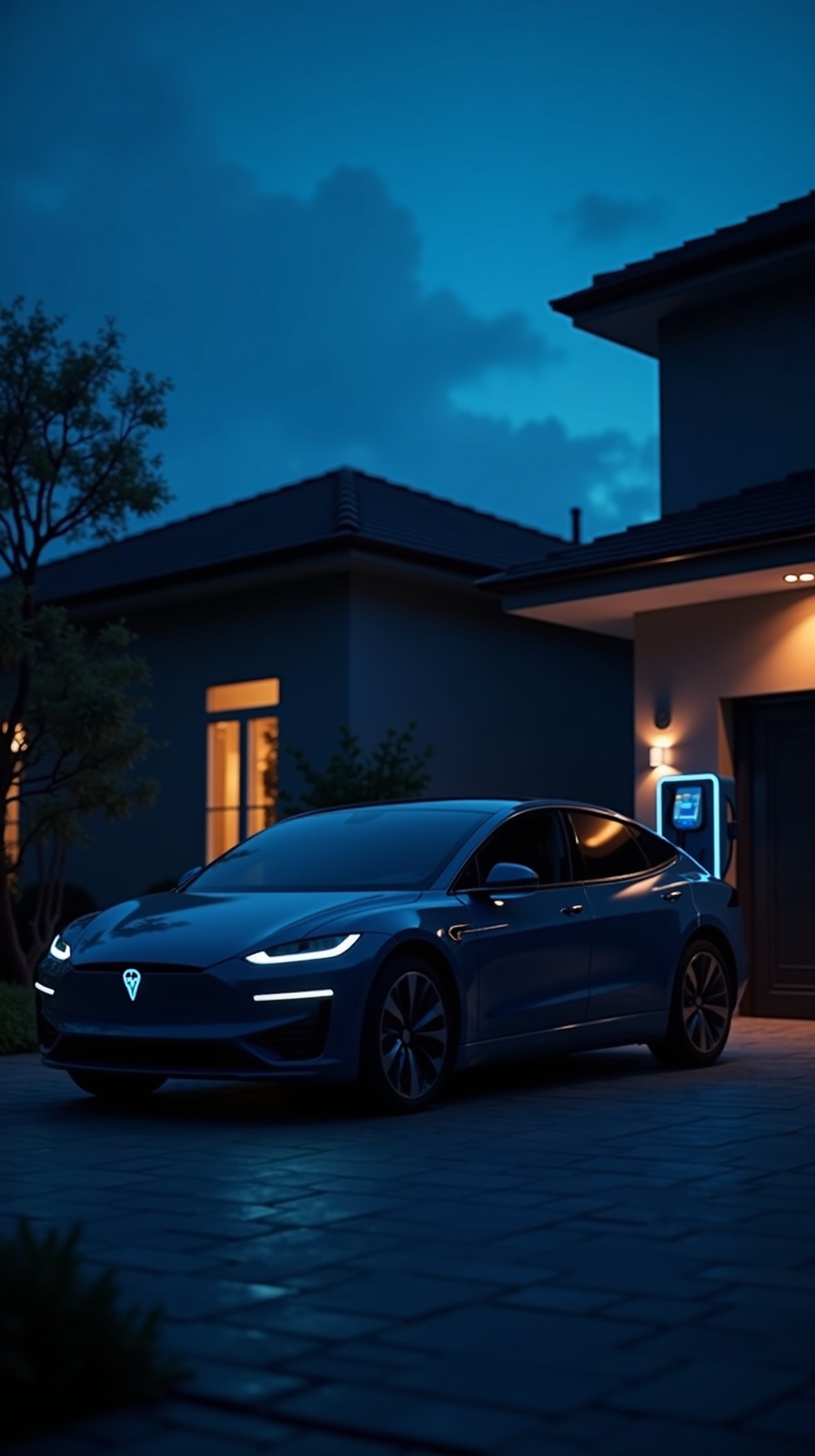

Tesla Wall Connector Installation on the Central Coast: A Closer Look
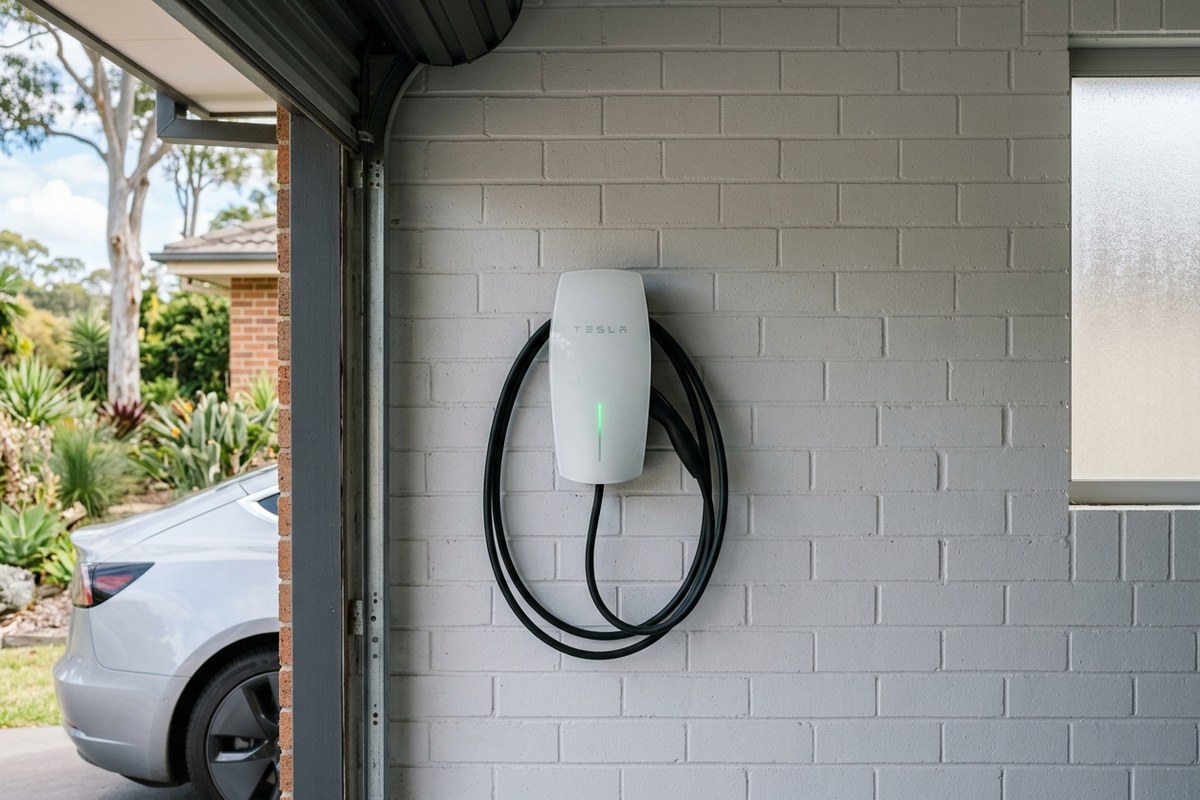
The Tesla Wall Connector has become one of the most common home chargers on Central Coast driveways, and not only on Tesla households. It is sleek, keenly priced, and uses the same Type 2 connector standard as every other EV sold here. What follows is a practical look at fitting one, the parts of the job that decide whether it works flawlessly for years.
Siting the Unit
The Wall Connector is a slim unit with a fixed (tethered) cable, so where it goes on the wall matters more than people expect. The connector needs to reach the car's charge port comfortably whichever way the car is parked, with the cable looping onto its holster rather than dragging on the ground. Mounted in the right spot, usually the garage or a sheltered carport wall, it becomes effortless to use; a hand's-width out of position and it is an irritation every single day.
The Circuit Behind It
Like any home charger, the Wall Connector runs on its own dedicated circuit back to the switchboard, with correctly rated protection and a residual current device. The supply is concealed behind the unit or run in enclosed conduit so nothing is exposed on the wall. The electrician confirms the switchboard has the capacity and the spare position before committing to the run; where it does not, the board is sorted first.
Setting the Charge Rate
During commissioning the Wall Connector is configured to the maximum rate the home's circuit can safely carry. This is a deliberate setup step, not a default, the unit is told what the circuit is rated for so it never tries to draw more than the installation allows. On a single-phase home that typically means around 7kW; on three-phase, more if the car accepts it.
Two Cars, One Supply: Power Sharing
A genuinely useful feature for two-EV households is power sharing. Several Wall Connectors can be linked so they intelligently divide the available supply between them rather than each demanding full output and overloading the home. If a second EV is on the horizon, it is worth raising at the quote stage, because the groundwork is far easier to lay during the first install than to retrofit later.
Weather and Placement Outdoors
The Wall Connector is rated for outdoor installation, so a carport or external wall is fine. In the salt-laden air closer to the coast it still pays to choose a sheltered position where practical, simply to keep the unit and connector at their best over the long run. A position under existing eaves or inside the garage line, where it is shaded and out of driving rain, will always age better than one fully exposed to the western sun and salt air.
What the Current Wall Connector Offers
The current Wall Connector is a Wi-Fi-connected unit that receives firmware updates and can be monitored through the Tesla app, where charging history and settings live. Its standout practical feature is power sharing across multiple units, and it can also be set to manage its draw so it does not overwhelm a constrained supply. The fixed cable comes in a generous length, which gives some flexibility in where the unit sits relative to the car's port.
How It Compares With Other Chargers
For a Tesla household the app integration is a genuine convenience, and the price has long made it attractive to drivers of other brands too. Where it is less suited is the solar-focused crowd: owners who specifically want the charger to chase surplus solar generation often prefer a unit built around that feature. As with any charger, the right pick depends on how the household drives and what it values. Whatever the brand, the value comes from a clean install, a correctly sized circuit, a tidy concealed cable run, and commissioning to the home's safe maximum. A premium charger fitted poorly will perform worse than a modest one fitted well.
Frequently Asked Questions
Can a Tesla Wall Connector charge cars other than a Tesla?
Yes. It uses the standard Type 2 connector used by EVs sold in Australia, so it charges any compatible vehicle. The Tesla app features are oriented to Tesla owners, but the charging itself is broadly compatible.
Does it need its own circuit?
Yes. Like any home charger it runs on a dedicated circuit with its own protection, connected to the switchboard and certified. It is not wired into existing power or lighting circuits.
Can I run two Wall Connectors for two EVs?
Yes, using power sharing. Linked units split the available supply between them so the home is never overloaded. Flagging a likely second car early makes the wiring much simpler to prepare.
Is it suitable for an outdoor wall or carport?
It is rated for outdoor use and works well in a carport. A sheltered position is still preferable in coastal areas to protect the unit and connector over time.
Thinking About a Tesla Wall Connector?
Get a free, no-obligation quote from a licensed electrician serving the Central Coast.