
Tethered vs Untethered EV Chargers: Which Suits Your Home
One of the first choices when picking a home charger has nothing to do with brand or speed: does the cable stay attached, or do you plug your own in each time? Tethered versus untethered is a small decision that shapes daily use for years. Here's how the two stack up for a Central Coast home.
Tethered: Cable Always Attached
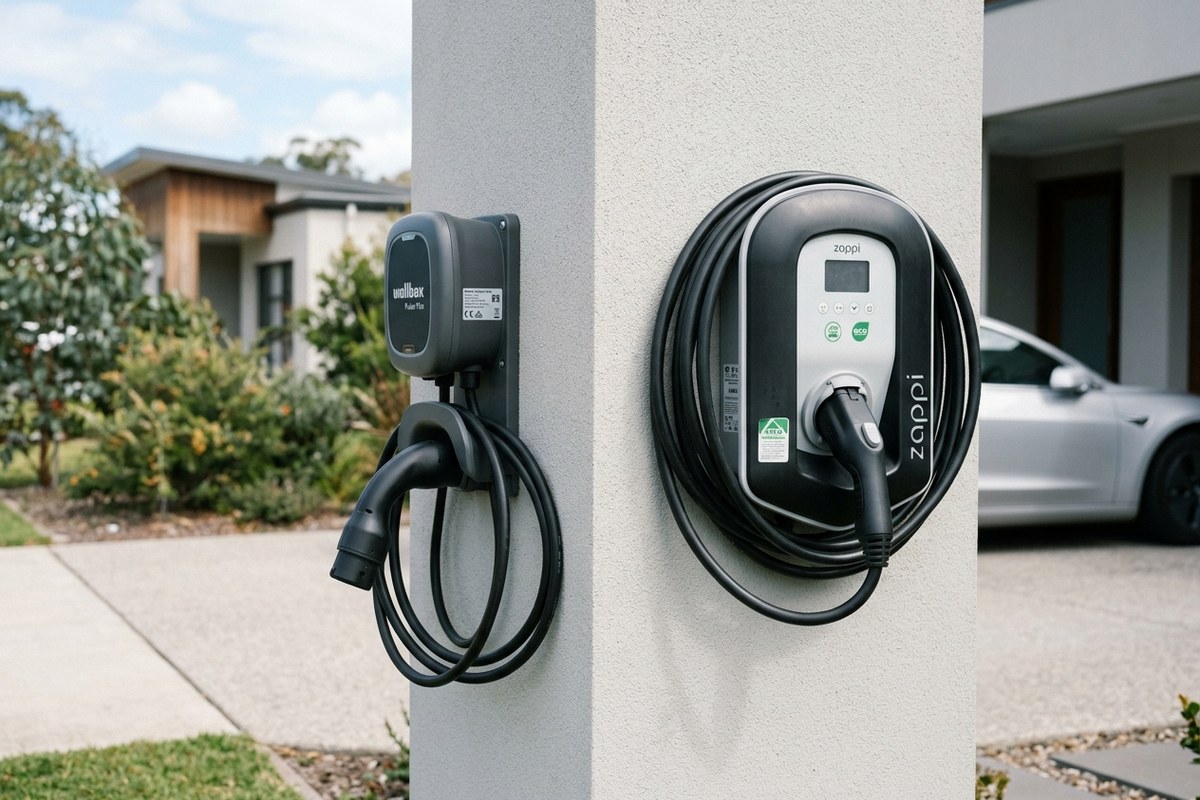
A tethered charger has the cable permanently fixed to the unit, coiled on a holster and ready to grab. Pull it out, plug into the car, done, no fishing a cable out of the boot in the rain. For a single car parked in the same spot every night, this is the easiest daily experience, and it's why tethered units are popular for home use.
The trade-offs are minor: the cable is always on show, its length is fixed at purchase, and a damaged tethered cable is a bigger repair than swapping a portable one.
Untethered: Bring Your Own Cable
An untethered (socketed) unit is just a smart socket on the wall; you plug your own Type 2 cable in to charge and unplug it when done. It looks tidier with no cable hanging, suits households with cars that have different cable needs, and lets you choose your own cable length. The cost is a little daily friction, getting the cable out and away each time, and remembering to keep it handy.
Security and Tidiness
Untethered units have a neatness and security edge: with no cable on the wall and the cable stored away, there's less on display and less to tamper with on an exposed frontage. Tethered units usually lock the connector to the car while charging, so the cable can't simply be unplugged mid-charge. For most suburban homes either is fine; the consideration grows on very exposed or shared frontages.
Coastal Weather
On the Central Coast, salt air and weather favour keeping gear protected. A tethered cable left out in an exposed spot weathers more than one stored away, so an untethered unit in a harsh position, or a sheltered mounting for a tethered one, are both sensible. Either way the charger itself should be rated for outdoor use where it's exposed.
The Simple Rule
One car, same spot, want maximum convenience: tethered. Multiple cable types, a preference for a tidy wall, or an exposed location: untethered. Both charge identically, the choice is purely how it fits daily life.
Cable Length and Where the Car Parks
One practical detail tips the decision for some homes: cable reach. A tethered unit's cable length is fixed when you buy it, so the charger has to be mounted where that cable comfortably reaches the car's port, which varies by vehicle, since charge ports sit in different spots. An untethered unit sidesteps this: you choose a cable length to suit, and can swap it if the parking or the car changes. Where the port location is awkward, untethered offers more flexibility.
Can You Change Your Mind Later?
To an extent. The wiring and mounting are the same either way, so a home set up for one can usually take the other, but the unit itself is fixed once installed, switching means a new charger. That's why it's worth deciding deliberately up front based on how the household parks and drives, rather than treating it as easily reversible. Either choice is sound; it just rewards a moment's thought before the install.
For most Central Coast homes with one car in a consistent spot, tethered wins on sheer convenience; for exposed frontages, varied cars, or a preference for a clean wall, untethered makes more sense. Neither is a wrong answer, they're just suited to different homes. A quick chat about where the car parks and how the household uses it usually makes the better fit obvious before anything is mounted.
Frequently Asked Questions
Is tethered or untethered faster?
Neither, charging speed comes from the charger's output, your supply and the car, not the cable arrangement. Tethered and untethered units of the same rating charge at the same speed.
Which is more convenient day to day?
Tethered, for a single car in the same spot, the cable is always there to grab. Untethered adds a little friction getting the cable out and away, in exchange for a tidier wall and flexibility.
Is an untethered charger more secure?
It can be, since there's no cable on display and it's stored away. Tethered units usually lock the connector to the car while charging, so both have reasonable security; the difference matters most on exposed frontages.
Does coastal weather affect the choice?
It can. A stored cable weathers less than one left out, so untethered suits very exposed spots, while a tethered unit is best mounted somewhere sheltered. The charger should be outdoor-rated wherever it's exposed.
Not Sure Which Setup Suits You?
Get a free, no-obligation quote from a licensed electrician serving the Central Coast.