
Three-Phase EV Charger Installation: When Faster Charging Is Worth It
Most home chargers run on single-phase power and do the job perfectly well. So when is three-phase charging actually worth it? The honest answer is: less often than people assume, but when the conditions line up, it is a genuine upgrade. Here is how to tell which camp a home falls into.
Single-Phase Versus Three-Phase, Briefly
A single-phase supply is what most homes have, and it caps a charger at around 7kW. A three-phase supply brings three live conductors into the property instead of one, which lets a compatible charger deliver much more, commonly 11kW, and up to 22kW. More power means range goes back into the battery faster, provided everything in the chain can keep up.
The Three Things That Have to Agree
Charging speed is only ever as fast as the slowest link, and there are three:
The Supply
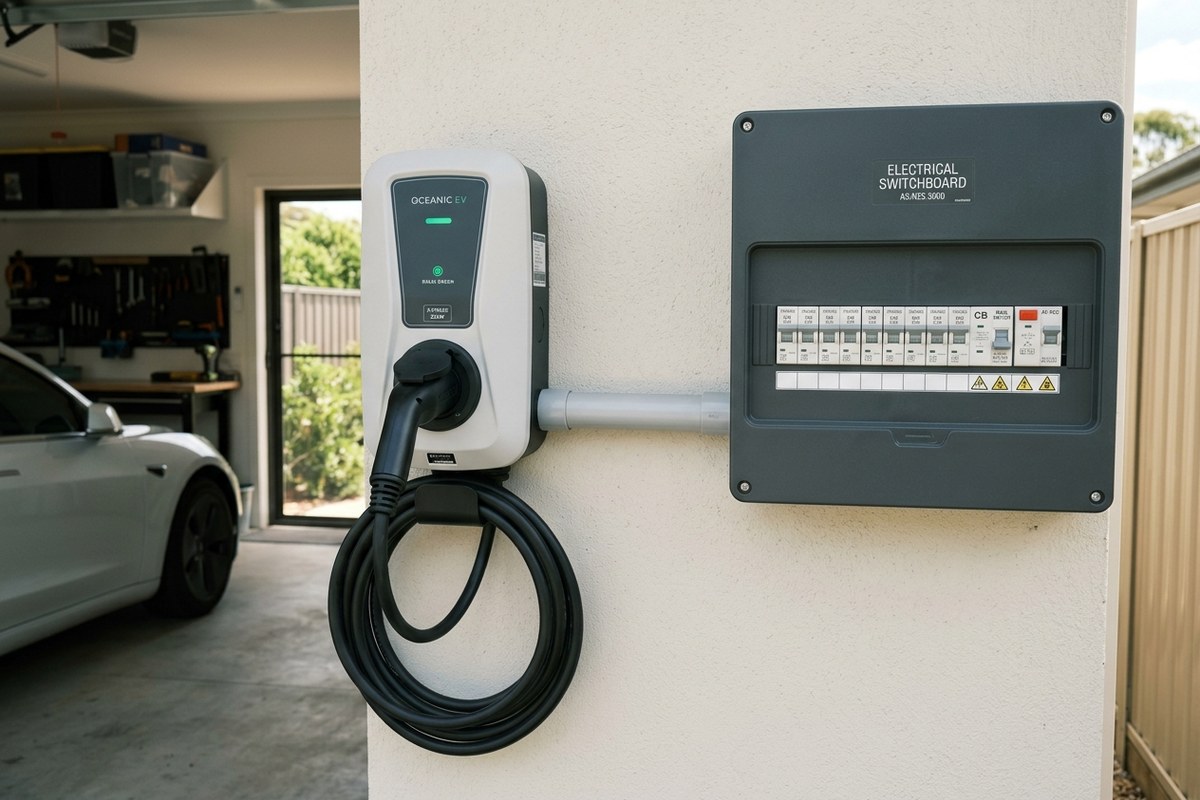
The property needs an actual three-phase supply at the switchboard. Some Central Coast homes have it, many do not. An electrician can confirm it in minutes by looking at the board. Bringing three-phase into a home that lacks it is a significant and costly job in its own right, rarely justified by charging alone.
The Charger
The unit itself must be a three-phase model. Single-phase chargers cannot deliver three-phase output no matter what they are plugged into.
The Car
This is the one most often overlooked. A vehicle has an onboard charger that sets how much AC power it will accept. Many EVs accept only single-phase, or a limited three-phase rate, so they will not use the full 22kW even from a 22kW unit. Checking the car's accepted AC rate before buying a big charger avoids paying for speed it cannot take.
Who Genuinely Benefits
Three-phase charging earns its place for high-mileage drivers who need to turn a battery around quickly between trips, for households running more than one EV, and for properties that already have three-phase and a car that can use it. For a typical single-car household that parks overnight, single-phase at 7kW refills the day's driving with hours to spare, and three-phase adds cost without adding any real benefit.
Getting the Install Right
A three-phase charger install follows the same disciplined path as any other, a dedicated three-phase circuit, correct protection, a clean concealed cable route, and commissioning to the home's safe limit, but with closer attention to balancing the load across the phases and confirming the switchboard can carry it. It is a job for an electrician comfortable with three-phase work.
The Cost of Bringing In Three-Phase
Where a home does not already have three-phase, converting to it is a substantial undertaking. It can involve the network provider, an upgraded supply from the street, a new meter, and switchboard changes, a project in its own right that runs well beyond the cost of the charger. For the great majority of homes, that expense is impossible to justify on charging alone. Three-phase makes sense when it is already present, or when it is being brought in for other reasons such as a workshop, a large air-conditioning system, or a pool, and the EV charger simply rides along.
Balancing the Load
On a three-phase install, an electrician pays attention to how the load sits across the three phases so the supply is used evenly rather than leaning on one. This is part of why three-phase work calls for an installer comfortable with it, a poorly balanced setup wastes the very advantage three-phase is meant to bring.
A Simple Way to Decide
The honest test is two questions: does the property already have three-phase, and does the car accept more than single-phase charging? Two yeses make three-phase well worth it. A no to either usually points straight back to a 7kW single-phase unit, which will quietly do the job overnight for years. The point is not that three-phase is better or worse, but that it only pays off when the property and the vehicle can both make use of it, so the decision is settled by the facts of the site, not by the bigger number.
Frequently Asked Questions
How much faster is three-phase charging?
Potentially two to three times faster than single-phase, since it can deliver up to 22kW versus around 7kW. The real-world gain depends entirely on the car accepting the higher rate.
How do I know if my home has three-phase power?
An electrician can confirm it at the switchboard quickly. As a rough guide, homes with three-phase often have larger main switches and were wired for higher loads, but a proper check is the only certain way.
Will every EV charge at 22kW on a three-phase charger?
No. The car's onboard charger sets the ceiling, and many EVs accept only single-phase or a reduced three-phase rate. Always check the vehicle's accepted AC charging rate before choosing a high-output unit.
Is three-phase worth it for one car parked overnight?
Usually not. A single-phase 7kW charger comfortably refills a normal day's driving overnight. Three-phase is best reserved for high-mileage, multi-EV, or already-three-phase homes.
Weighing Up Three-Phase Charging?
Get a free, no-obligation quote from a licensed electrician serving the Central Coast.