

Workplace and Fleet EV Charging: Planning a Rollout for Your Business
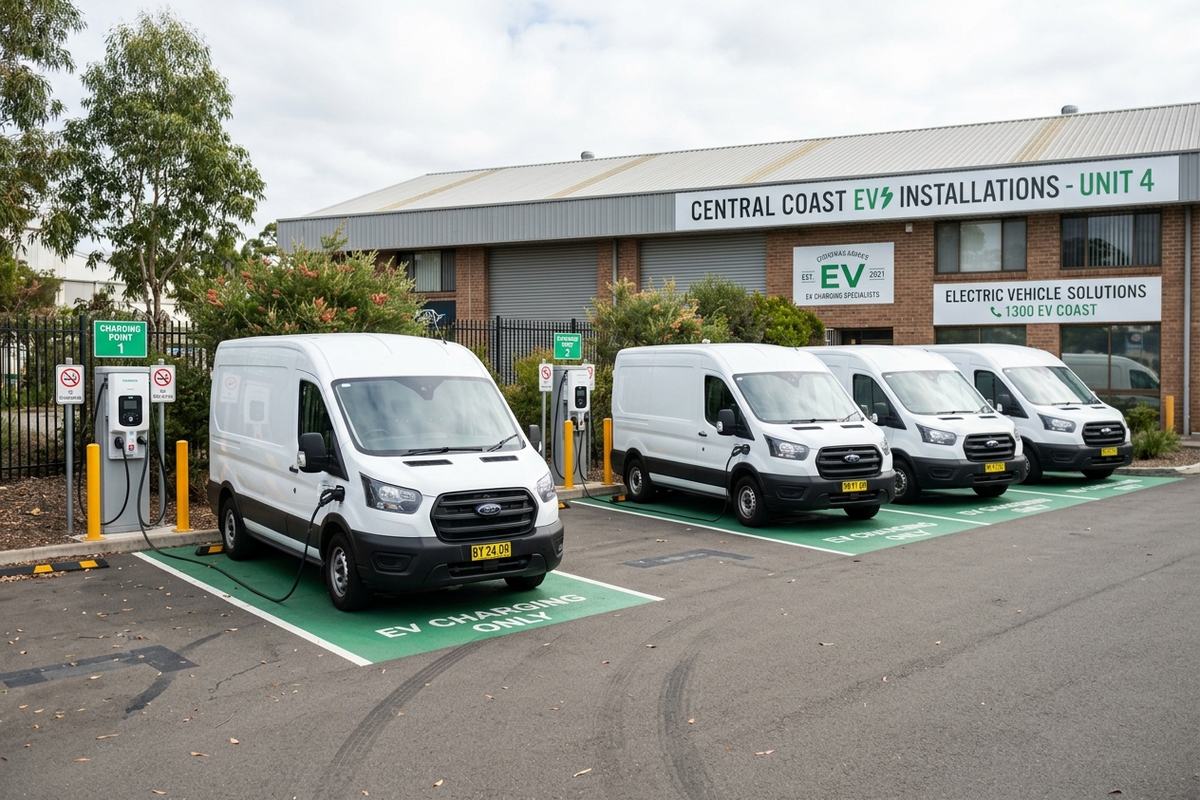
For a business, EV charging stops being a single wall box and becomes an infrastructure decision. Whether it's a fleet that has to be ready each morning or staff and customer parking, the difference between a smooth rollout and an expensive headache is planning. Here's how a Central Coast business can approach it.
Start With Demand, Not Hardware
The first question isn't which charger to buy, it's how the vehicles will actually be used. A fleet that returns to a depot overnight has a predictable, schedulable load. Staff parking is sporadic through the day. Customer or destination charging is unpredictable. Each pattern points to a different number of bays, charging speed, and management approach, so mapping the real usage comes before any spec.
The Site Supply Sets the Ceiling
Every plan runs into one hard limit: how much power the site has available. Running several chargers at full output at once can exceed a site's supply, and a supply upgrade is a significant cost. This is why commercial charging leans heavily on load management, sharing the available power across the bays so the site stays within its limit. Often a site can serve more vehicles than its raw supply suggests, because they rarely all charge flat-out at the same moment.
Staging the Rollout
Few businesses need every bay on day one. A sensible rollout installs the backbone, the supply provision, the main cabling, the management system, sized for where the business is heading, then fits chargers in stages as the fleet or demand grows. Laying that groundwork once is far cheaper than repeatedly returning to dig up and re-cable a car park. The early design decision is really about how much headroom to build in.
Metering, Access and Reporting
A business usually needs to know who charged and how much, for fleet cost tracking, for billing staff or customers, or for reimbursement. Commercial chargers provide per-bay metering and access control, and the reporting that comes with them. Deciding what the business needs to measure shapes the choice of system.
Get a Site Assessment First
Because commercial sites vary so widely in supply, layout and use, there's no standard package, it's assessed and quoted per site, starting from the electrical capacity and the usage plan. The most useful first step is a site assessment that establishes what the supply can do and what staging makes sense.
Driver Experience and Access Control
A charging setup only works if it's easy to use day to day. For staff and fleet drivers that means simple access, often an app or a tap card, and clarity about which bays are available. For customer or visitor charging it means signage and a process that doesn't need a staff member to intervene. Access control also stops bays being used by the wrong people, or vehicles sitting plugged in long after they're full, which matters most where bays are in demand.
Maintenance and Reliability
Commercial chargers earn their keep only while they're working, so reliability and support matter more than on a home unit. It's worth choosing equipment with solid local backing and considering who maintains it, especially for a fleet that depends on vehicles being ready each morning. Building in a little redundancy, a spare bay, or chargers that keep working if one fails, keeps the operation moving rather than stranded by a single fault.
For a Central Coast business, the smartest first move is rarely buying chargers, it's getting a site assessment that establishes what the supply can do and what staging makes sense for the way the vehicles are used. From there the rollout can be sized and phased with confidence, building in the headroom, metering and access control the operation needs rather than discovering the gaps after the first bays go in.
Frequently Asked Questions
How many chargers can a site support?
It depends on the site's electrical supply, but load management lets multiple bays share the available power so you can often serve more vehicles than the raw supply suggests, since they rarely all charge at full output at once. A site assessment confirms the number.
Do all the bays need to be installed at once?
No. A sensible rollout lays the backbone, supply provision, main cabling and management, sized for where the business is heading, then adds chargers in stages. That's far cheaper than re-cabling the car park later.
Can charging be tracked per user?
Yes. Commercial chargers offer per-bay metering, access control and reporting, so you can let a business track fleet costs or bill staff and customers. What you need to measure shapes the system choice.
Is commercial charging quoted like a home install?
No. Commercial sites vary widely, so they're assessed and quoted per site from the electrical capacity and usage plan rather than a fixed price. A site assessment is the starting point.
Planning Charging for Your Business or Fleet?
Get a free, no-obligation quote from a licensed electrician serving the Central Coast.