
Zappi vs Ocular vs Wallbox: Comparing Smart Home EV Chargers
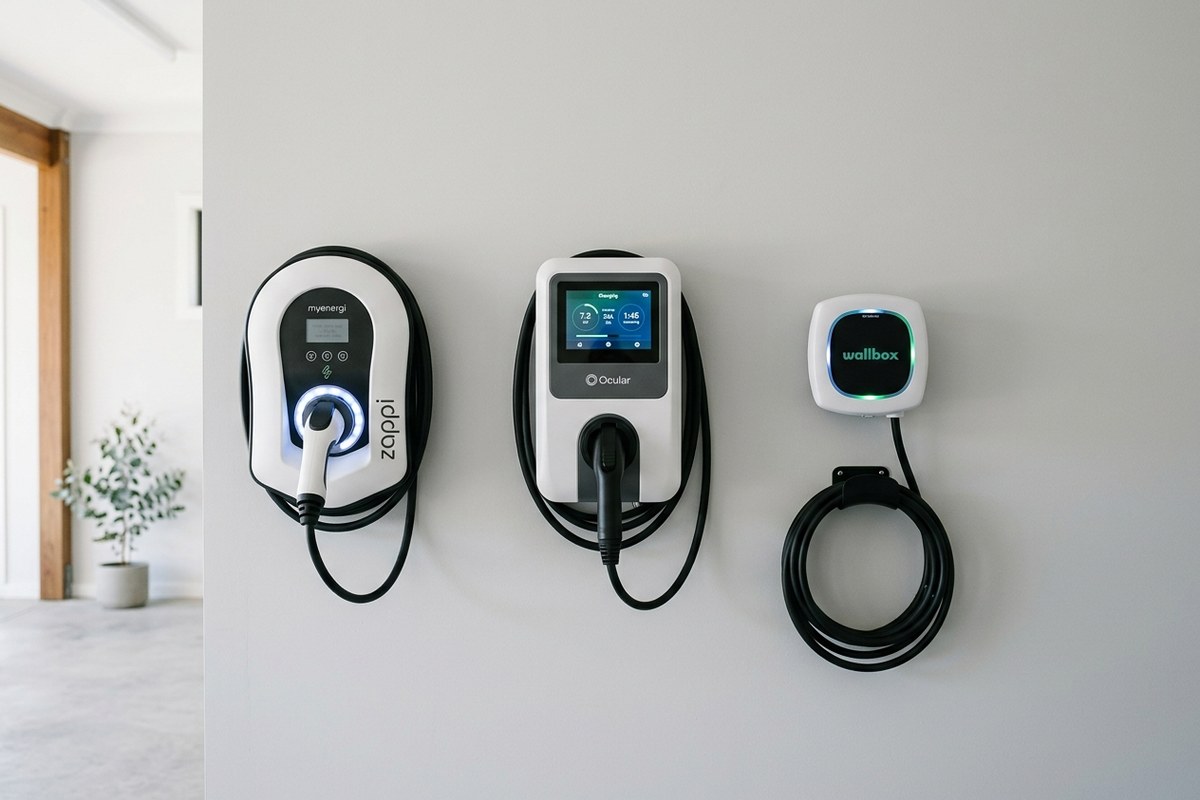
Once you've decided on a smart charger, the field narrows to a handful of names that come up again and again on Central Coast jobs: Zappi, Ocular and Wallbox. None is simply "best", they lean in different directions, and the right pick depends on what a home actually needs. Here's how they compare on the features that matter.
Zappi (myenergi)
Zappi made its name with solar owners. Its standout is genuine solar-following: dedicated charging modes that prioritise surplus generation, so the car runs on sunshine when there's spare and tops up from the grid only when asked. It includes load management and connects to the myenergi app and ecosystem. If a home has solar, or plans to, Zappi is the one that's built around it.
Ocular
Ocular is a strong, widely available option in the Australian market, often chosen for solid value and broad compatibility. Models include app control, scheduling and load management, and both tethered and socketed versions are common. It's a practical all-rounder for a household that wants smart features and reliability without a specific solar obsession.
Wallbox
Wallbox (the Pulsar range is common here) is compact and design-led, with a tidy app, scheduling and dynamic load management. It packs full smart functionality into a small unit, which suits homes where the charger sits somewhere visible and size or looks matter. Power-sharing options exist for multi-charger setups.
The Features That Actually Decide It
Strip away the badges and three questions sort it: Do you have solar and want the car to chase surplus? That leans Zappi. Do you want a dependable, well-priced all-rounder? Ocular fits. Do you want a compact, neat unit with a polished app? Wallbox suits. All three offer the load management that keeps a busy switchboard safe, so that's a baseline, not a differentiator.
What Matters More Than the Brand
Whichever unit wins, the install decides how well it performs: a correctly sized circuit, the load-management sensor set up properly at the switchboard, and commissioning to the home's safe limit. A mid-range charger installed well beats a premium one set up poorly. Choose the unit whose strengths match the home, then have it installed and configured right.
Compatibility and Your Car
A reassuring point across all three: because they use the Type 2 standard, any of them will charge any compatible EV sold here, Tesla included. The brand of charger and the brand of car are independent choices. What differs is the app and ecosystem each sits in, and how the smart features are presented, so the decision is about which interface and capabilities suit the household, not about matching a badge to the car in the driveway.
Warranty, Support and Updates
Worth weighing alongside features: each brand's warranty, local support, and whether the unit receives firmware updates. A charger is a long-life appliance, so a unit that gets updates and has solid backing in Australia is worth a little more than a cheaper one with thin support. An installer who fits these regularly will know which have been reliable in the field, a practical input that spec sheets don't capture.
In the end the sharpest way to choose is to start from the home, not the brand: solar or no solar, single or three phase, tethered or untethered, and which app experience appeals. Answer those and usually one unit stands out. All three are sound when matched to the home and installed properly, so the brand debate matters far less than getting the fit and the install right.
A final practical point: availability and lead times can vary, and a unit your installer fits regularly will usually be quicker to source and easier to support than a less common model chosen purely on a spec sheet. There is real value in a charger your electrician knows well, has installed many times, and can service if needed, sometimes that familiarity matters more than a marginal feature difference between three units that all do the core job well.
Frequently Asked Questions
Which smart charger is best for solar?
Zappi is the one built around solar, with modes that prioritise surplus generation. Ocular and Wallbox can schedule charging and some support solar features too, but Zappi's solar-following is its defining strength.
Do all three handle load management?
Yes. Zappi, Ocular and Wallbox all offer dynamic load management to keep the home within its supply limit, so that capability is a baseline across them rather than a deciding factor.
Does the brand matter more than the install?
No. A well-matched unit installed and configured properly, correct circuit, load sensor set up, commissioned to the safe limit, outperforms a premium charger fitted poorly. The install is what makes any of them work well.
Can any of these charge a non-Tesla and a Tesla?
Yes. All use the Type 2 standard and charge any compatible EV, including locally delivered Teslas. The choice is about features, not which car you drive.
Choosing Between Smart Chargers?
Get a free, no-obligation quote from a licensed electrician serving the Central Coast.